Noble Gases?
Noble gases are, unlike what the name suggests, not gases with a sense of superiority or land. Rather, they are gases that do not chemically react with anything and are inert. This is due to having full electron layers, and thus, they cannot gain or lose electrons (also known as react) to any other substances barring EXTREME scenarios.
Which gases are noble?
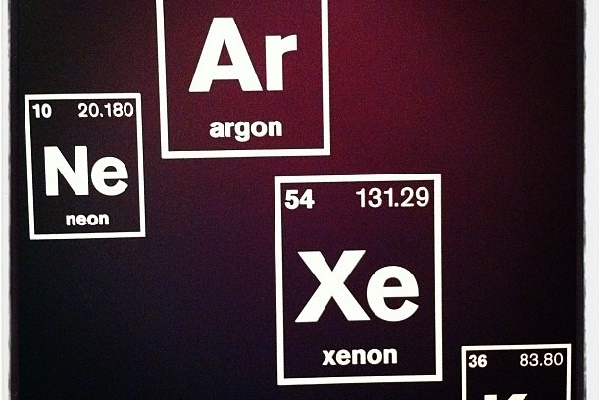
Found in Group 18 of the periodic table, the noble gases - from lowest to highest atomic mass - are helium (He), neon (Ne), argon (Ar), krypton (Kr), xenon (Xe), and radon (Rn). This can be remembered with great difficulty by remembering he-ne-ar-kr-xe-rn, which spells absolutely nothing.

What are they used for?
Noble gases are most well-known for their use in neon signs (which, despite the name, do not always use neon as the glowing element), but they have an assortment of other uses. In particular, helium - as well as making balloons float - is a vital element in allowing MRI machines to work!